
Problem solving · MacBook
How to Check MacBook Battery Health - Complete Guide
Three ways to check, one decision: replace now, or wait six more months? Here is the technician's framework.
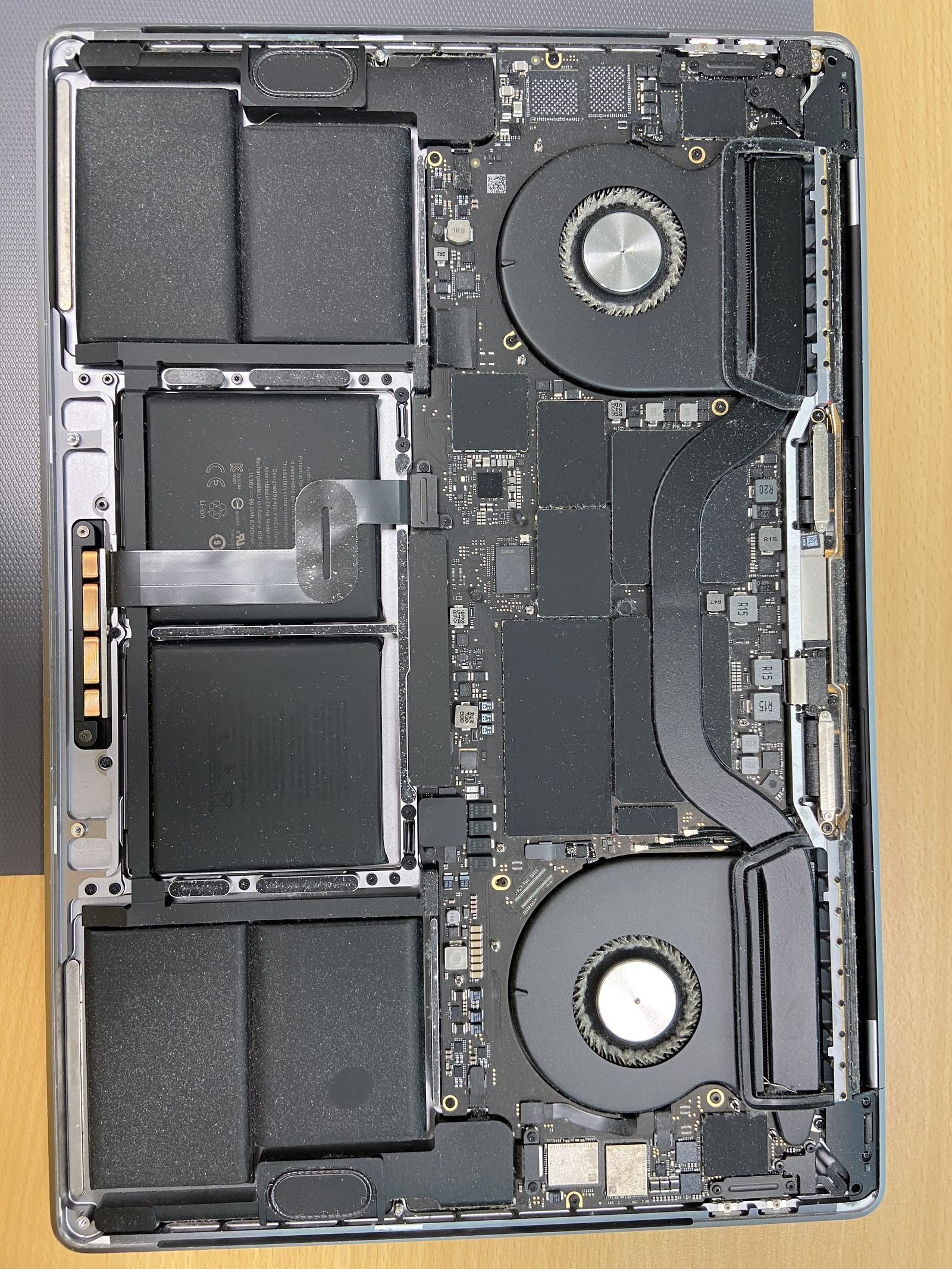
How to Check MacBook Battery Health - Complete Guide?
Quick answer
Method 1 - System Settings (macOS Sequoia / Sonoma / Ventura)
The easiest method on any modern macOS:
- Apple menu → System Settings (or "System Preferences" on Monterey and earlier)
- Battery → Battery Health (small button on the right)
- Read "Maximum Capacity" percentage and "Condition" status
What you see: Maximum Capacity is shown as a percentage (e.g. "92%"). Condition is either "Normal" or "Service Recommended" (sometimes "Service Battery" on older macOS).
Method 2 - Option-click battery icon (older macOS)
On Big Sur and earlier, hold the Option key and click the battery icon in the menu bar. A dropdown appears showing Cycle Count, Condition, and current power draw - faster than going into Preferences.
On macOS Monterey and later, Apple removed the cycle count from this dropdown. To see cycle count on modern macOS, use Method 3 (Terminal) or System Settings → General → About → System Report → Power.
Method 3 - Terminal command (most detailed)
Open Applications → Utilities → Terminal and paste:
system_profiler SPPowerDataType | grep -E "Cycle|Condition|Maximum|Health"
Output looks like:
Cycle Count: 412
Condition: Normal
Maximum Capacity: 91%
Most detailed view, no apps to install. Free third-party app coconutBattery shows the same data plus design capacity in mAh, current full-charge capacity in mAh, manufacture date, and a graph of degradation over time - the most useful diagnostic tool we recommend.
Reading the data - cycle count, capacity, condition
- Cycle Count: total number of full 0-100% discharge cycles. Two 50% discharges count as one cycle. Apple rates M-series for 1,000 cycles minimum.
- Maximum Capacity: current full-charge capacity vs the original design capacity, as a percentage. New MacBook = 100%. Service threshold = 80%.
- Condition: macOS's overall verdict. "Normal" means battery operating within spec. "Service Recommended" or "Service Battery" means replacement is due.
When to replace - general rules
Replace if any of:
- Cycle count above 800 AND Maximum Capacity below 85%
- Condition shows "Service Recommended" or "Service Battery"
- Random shutdowns at 30-50% indicated charge
- MacBook gets noticeably slower under load (M-series throttling)
- Trackpad clicking feels spongy or won't click (early swelling)
- Bottom case bulging or lid won't sit flat (advanced swelling - urgent)
- Real runtime is below 60% of original spec (e.g. M2 Air rated 18 hours, you're getting under 11)
Battery cycle limits per MacBook model
| Model | Cycle limit | Battery capacity (Wh) | Notes |
|---|---|---|---|
| MacBook Air 13″ M1 (2020) | 1,000 | 49.9 Wh | First Apple Silicon Air |
| MacBook Air 13/15″ M2 (2022/2023) | 1,000 | 52.6 / 66.5 Wh | Notch design |
| MacBook Air 13/15″ M3 (2024) | 1,000 | 52.6 / 66.5 Wh | Same as M2 |
| MacBook Air 13/15″ M4 (2025) | 1,000 | 53.8 / 68.5 Wh | Slight uplift |
| MacBook Air 13/15″ M5 (2026) | 1,000 | 53.8 / 68.5 Wh | |
| MacBook Pro 13″ M1/M2 | 1,000 | 58.2 Wh | Last 13″ Pro |
| MacBook Pro 14″ M1-M5 Pro/Max | 1,000 | 70 Wh | |
| MacBook Pro 16″ M1-M5 Pro/Max | 1,000 | 100 Wh | Largest cell, airline limit |
| MacBook Pro 13/15″ Intel (2016-2020) | 1,000 | 58-100 Wh | Glued cells, harder to replace |
M1 vs M2 vs M3 vs M4 vs M5 - chemistry differences
All M-series MacBooks use lithium polymer pouch cells from the same family of suppliers (mainly LG Chem and ATL). The cell chemistry is essentially identical across M1-M5 - the differences are pack capacity (Wh) and management firmware.
What has changed across generations: the M-series power management firmware has gotten progressively better at protecting cells from extreme temperatures (the M3 update added cooler charging in hot climates - relevant for Dubai summer). But cell longevity has been roughly constant - about 4-5 years of daily use before "Service Recommended".
Apple's "Service Battery" message - what it means
"Service Recommended" or older "Service Battery" appears when macOS's diagnostic judges that the battery's full-charge capacity has degraded sufficiently to warrant replacement. Typical triggers:
- Maximum Capacity has dropped below 80% AND cycle count is above 700
- An unexpected shutdown event at moderate charge level
- Battery fails internal calibration self-test
Once you see this message, M-series MacBooks engage CPU throttling to protect the cell from peak current draw. Performance drops 20-40% on heavy workloads until replacement.
Cost to replace at our shop
See our full MacBook battery cost guide for every model. Quick summary: AED 450-500 for Air, AED 600-650 for 14″ Pro, AED 700 for 16″ Pro. Same-day. 12-month warranty.
Frequently asked questions
- Cycle Count is how many full 0-100% discharges the battery has completed (a usage measure). Maximum Capacity is how much charge the battery can still hold versus when new (a degradation measure). Both matter - replace when cycle count is above 800 AND capacity below 85%.
- Apple removed it from the menu bar Option-click. Easiest: Apple menu → About This Mac → More Info → System Report → Power → look for 'Cycle Count'. Or use the Terminal command in Method 3 above.
- Apple's official threshold is 80% (where rated cycle life ends). In practice, you'll notice noticeably worse runtime around 85% and significant runtime loss at 75%. M-series MacBooks throttle performance below 80%, so we recommend replacement at 80% even if 'Condition' still says Normal.
- Occasionally yes. macOS's algorithm can show inflated capacity after a fresh calibration or deflated capacity after deep discharge. If your runtime feels much worse than the percentage suggests, run a calibration cycle (full discharge → full charge) and re-check.
- Out-of-warranty: yes, AED 700-1,200 depending on model at Apple Store. Inside the 1-year Apple warranty: only if capacity is below 80% AND there's no liquid/physical damage. AppleCare+ covers it at no charge if below 80%.
- coconutBattery (Mac App Store, free version available) is the gold standard. Shows design capacity, current full-charge capacity in mAh, cycle count, manufacture date, and degradation history. Used by most Mac technicians.
Related on MacBook Repair Dubai
About the author
Ali is a senior macbook battery specialist at MacBook Repair Dubai, Dubai's longest-running Apple-only repair workshop (since 2004). Personally signs the QC checklist on every job leaving the bench.